Hail Damage Roof Repair - Jacksonville Metro
Hail Damage Roof Repair in Saint Johns, FL
Saint Johns roofs take the same Florida beating as the rest of the metro, and local crews run County Road 210 and St. Johns Parkway daily. One call connects you with an independent roofer who works St. Johns County every week.
Serving Jacksonville and 10 nearby cities Open 24/7 for emergencies
Hail damage roof repair in Saint Johns covers bruised and fractured shingles, dented metal panels and vents, and cracked tiles after hail events, verified by hands-on inspection rather than ground photos. Call (725) 765-9243 and we will connect you with a local contractor who covers Saint Johns.
What does hail do to roofs in Saint Johns?
Hail work in Saint Johns begins with proof, not repairs. The roofer chalks a test square on each slope, counts and photographs the fractures, and checks gutters and soft metals for the corroborating dents that separate a hail event from ordinary wear. Genuine fracture damage is scoped for repair or replacement support; cosmetic marks are reported as cosmetic, in writing.
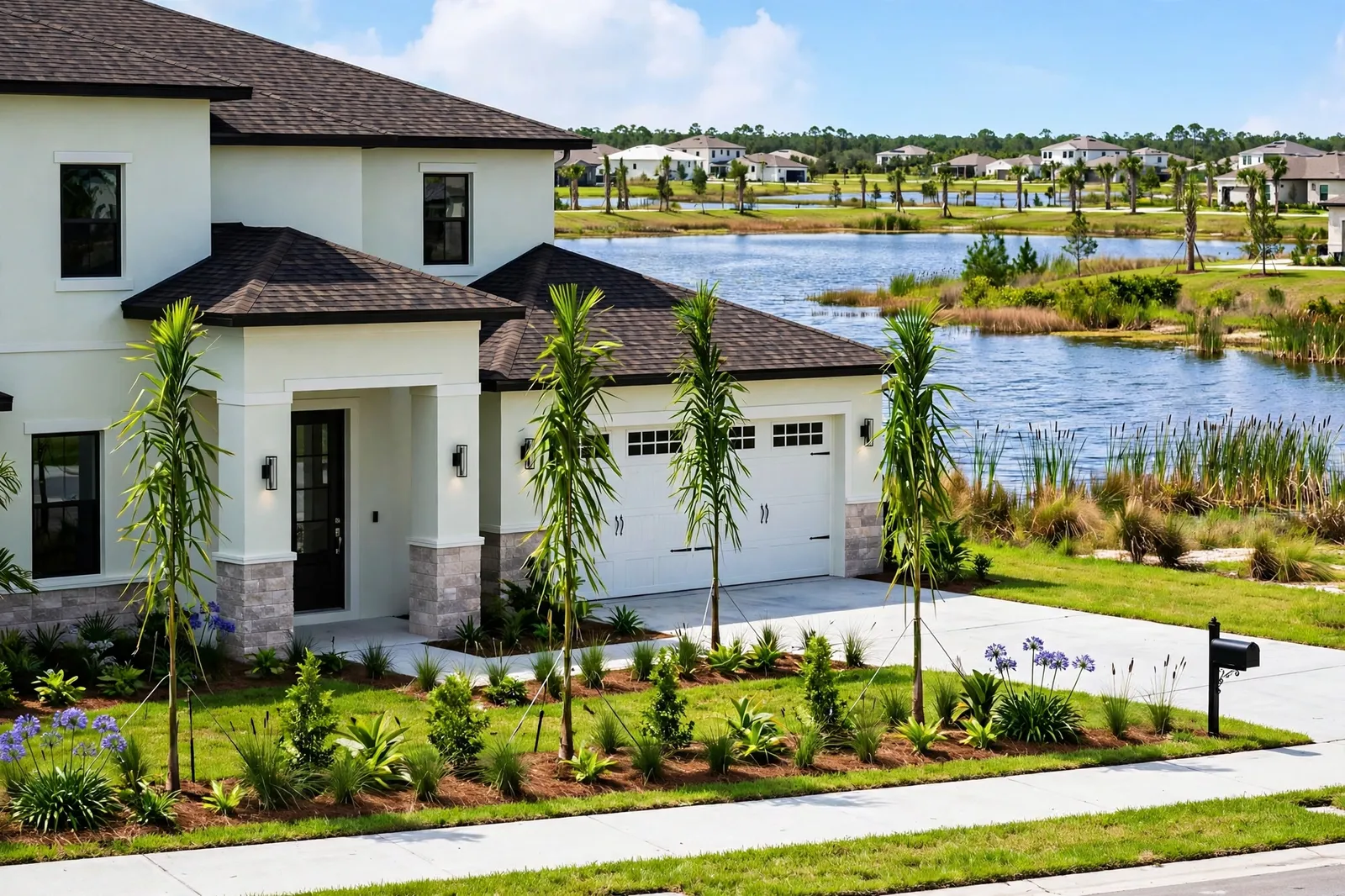
Saint Johns is among the newest housing in the metro: 2000s and later subdivisions with architectural shingle roofs, active HOAs, and amenity-centre communities. Newer Saint Johns roofs are reaching their first repair cycle together, so sealant failure, vent boot splits, and builder-grade flashing details appear across whole streets in the same seasons.
- Test-square hail inspection with chalk-marked hits per slope
- Shingle bruise and mat fracture assessment by hand feel
- Metal vent, cap, and flashing dent documentation
- Replacement of fractured shingles and cracked tiles
- Photo and measurement report formatted for claim review
- Gutter, screen, and soft-metal checks that corroborate hail size
The inspector marks a test square on each slope and circles every hit, then feels each mark for the mat fracture that separates cosmetic granule loss from functional damage. Soft metals, vents, gutters, and screens are checked for the corroborating dents that establish hail size and direction. The report records hits per square by slope.
Hail damage is a measurement exercise. A proper inspection counts and tests hits inside marked squares on each slope, because adjusters decide on density and fracture, not impressions.
Neighbourhood-level detail for Julington Creek sits on the Hail Damage Roof Repair in Julington Creek page.
How much does hail damage repair cost in Saint Johns?
Minor hail damage roof repair in Saint Johns costs $350 to $1,200, and larger work costs $1,200 to $3,500.
The verdict drives the price. Scattered functional hits in one area price as a section repair. Damage across every slope moves the conversation toward replacement, usually through the claim process. The inspection itself sits in the published $150 to $400 range and produces the evidence either path needs.
Newer Saint Johns roofs are reaching their first repair cycle together, so sealant failure, vent boot splits, and builder-grade flashing details appear across whole streets in the same seasons. The exact figure comes in a written quote after the roof has been measured and inspected.
Metro-wide material ranges sit in the Jacksonville roof replacement cost guide for homeowners weighing this work against replacement.
Is water entering now?
If water is coming in now, contain what you can, photograph the damage for the file, and call before the next rain band reaches the area. Hail claims stand on hands-on proof: test squares, chalked fractures, and photos, gathered before any repair is discussed.
How is hail damage checked in Saint Johns?
Book the check while the evidence is fresh and before storm-season stories blur dates. Hail fractures do not leak immediately; they fail months later as the mat cracks through, so a prompt documented inspection protects both the roof and any claim deadline.
Calls from Saint Johns route along County Road 210 and St. Johns Parkway, past Julington Creek. The specialist records the address, the roof type, and whether water is entering, then matches the call to a roofer whose regular rounds include Saint Johns.
Call (725) 765-9243 first for urgent hail damage roof repair needs in Saint Johns.
Hail damage in Saint Johns hides in plain sight: bruised mats that look like ordinary wear, split caps, and vents dented soft. It clusters on the storm-facing slopes and on older shingles whose granule cover was already thin, which is why the test square, not a glance, settles the question.
Repair or replace after hail in Saint Johns?
Cosmetic granule displacement without mat fracture is monitored, not repaired. Fractured mats shorten the shingle's life at each hit and justify section repair or, at density across slopes, replacement. The test-square counts make the threshold objective instead of arguable.
In Saint Johns, the housing behind those decisions is 2000s and later subdivision stock, spread along County Road 210 and St. Johns Parkway and the streets behind them.
The local stock shapes the work: Saint Johns housing is largely 2000s and later subdivision stock. That is why the inspection in Saint Johns starts with the details that fail first on homes of that era.
Minor work of this kind typically needs no permit in St. Johns County. Structural deck work and full replacement need a St. Johns County permit under the Florida Building Code, and the roofer pulls the permit and schedules the inspections before work starts.
A pre-work survey through roof inspection in Saint Johns, FL documents the roof before work starts.
The introduction is the whole of what this site does in Saint Johns: a specialist takes the call, records the roof problem, and connects the homeowner with an independent roofer covering that part of St. Johns County. The roofer inspects, quotes, and does the work. Call (725) 765-9243 to start.
Hail Damage Roof Repair in Saint Johns neighbourhoods
Neighbourhood-level pages sit under this Saint Johns page, so local searches land on local content.
More services in Saint Johns
Storm Damage Roof Repair in Saint JohnsSecuring, photo documentation, and repair after Jacksonville stormsRoof Inspection in Saint JohnsEvery slope, the flashing, and the attic, with dated photos and a written summaryRoof Repair in Saint JohnsLeak repair, shingle replacement, and flashing work with published price rangesRoof Replacement Cost in Saint JohnsPublished ranges and the factors that move a quote, so any price can be checkedHow It Works
How do you book through this site?
1
Call
Call (725) 765-9243 and describe the problem: a leak, storm damage, an aging roof, or a cost question.
2
Get connected
We connect you with an independent roofing contractor who covers your part of the Jacksonville metro.
3
Get your roof assessed
The contractor inspects the roof and gives you their price and timeline directly. You decide whether to go ahead.
Hail Damage Roof Repair questions from Saint Johns homeowners
Usually not. Hail bruises hide under intact-looking granules, and the fracture is in the mat underneath. Ground photos miss it, and door-knock opinions given from the street are not evidence. The hand-feel test inside chalked squares is the standard the claim process recognises.
Most Florida policies cover hail as a sudden event. The claim stands on documented hit density per slope and mat fracture, plus corroborating soft-metal dents. The written report supplies all three. Cosmetic marks without fracture are commonly denied, and the report says so honestly when that is the finding. A cosmetic-only report is still valuable documentation of the roof's condition on that date. In Saint Johns, newer Saint Johns roofs are reaching their first repair cycle together, so sealant failure, vent boot splits, and builder-grade flashing details appear across whole streets in the same seasons.
Stones around an inch and above can fracture older or thinner shingles; newer architectural shingles resist more. Condition matters as much as size: a worn roof bruises under hail that a new roof shrugs off. The inspection records both the hits and the roof's prior condition. Fracture, not granule loss, is the functional threshold, and the report states which was found.
Then the report documents cosmetic marks only, with photos, and recommends monitoring. The homeowner keeps the dated report, which still has value: it proves the roof's condition after that storm for any future claim or sale conversation.
As soon as the roof is safe to walk. Chalk marks and mat testing work weeks later too, but earlier is cleaner for claim timelines and for separating this event from the next storm. If another storm has already passed, the report notes the limitation plainly.