Roof Repair - Jacksonville Metro
Roof Repair in Jacksonville, FL
Across Jacksonville and 10 nearby cities, roof repair is scoped, documented, and priced in the open. One call connects you with an independent roofer who covers your part of the metro.
Serving Jacksonville and 10 nearby cities Open 24/7 for emergencies
Roof Repair in Jacksonville covers leak repair, shingle replacement, flashing reseals, and vent boot swaps on shingle, tile, metal, and flat roofs. Call (725) 765-9243 and we will connect you with a local contractor who covers Jacksonville.
What roof repairs are most common in Jacksonville?
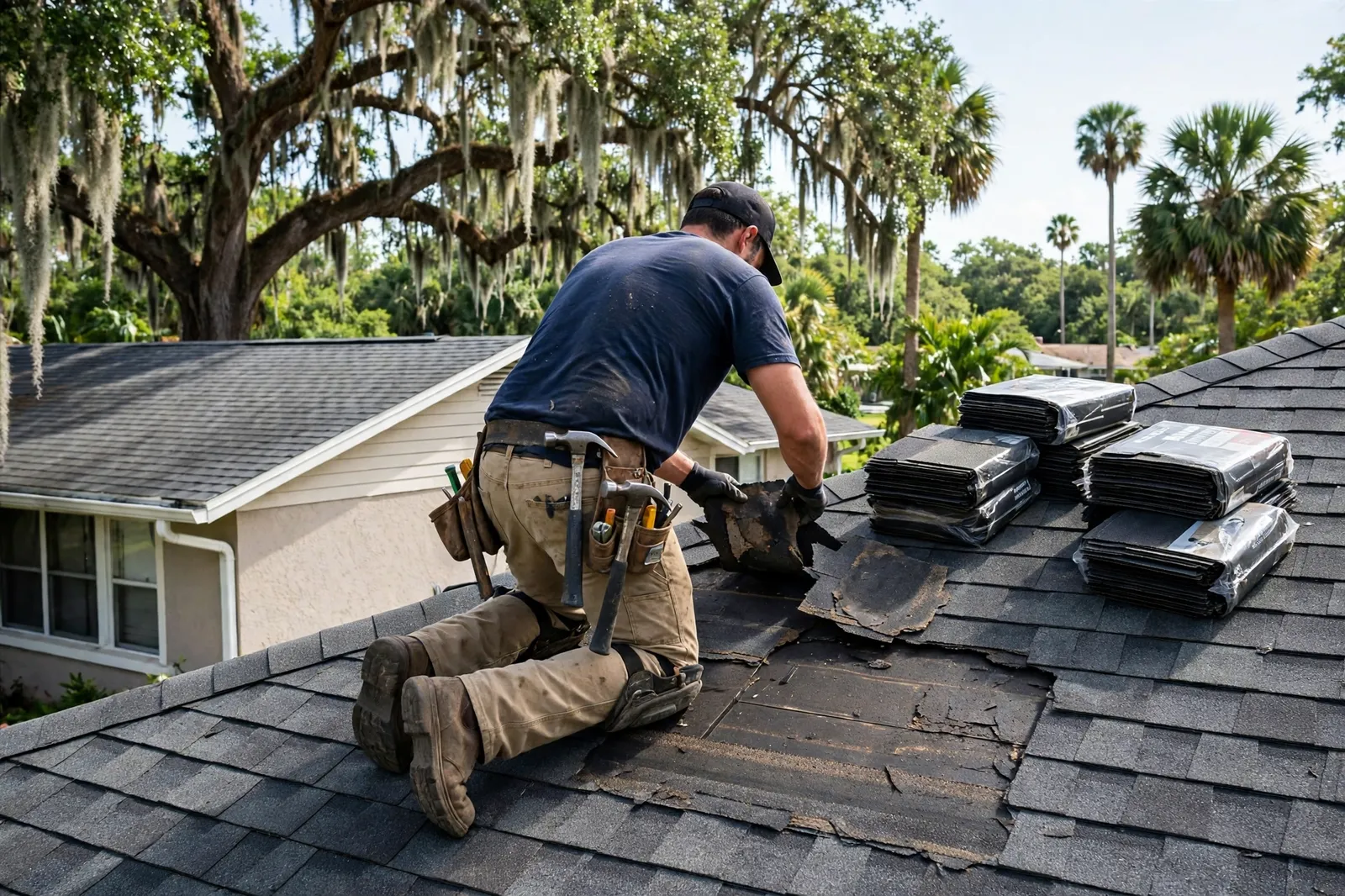
Roof Repair in Jacksonville covers leak repair, shingle replacement, flashing reseals, and vent boot swaps on shingle, tile, metal, and flat roofs.
Damage spread across most slopes points away from patch work and toward a full replacement quote. Localised damage on a sound deck stays in repair territory.
- Leak repair at flashing lines, valleys, and vent boots
- Shingle replacement on wind-lifted tabs and storm-torn courses
- Flashing reseals around chimneys, walls, and skylights
- Vent boot swaps where rubber seals split under the Florida sun
- Valley clearing and metal renewal after debris corrosion
- Small decking patch repairs where water has softened the wood
Leak tracing starts inside the home. The roofer reads the ceiling stain, enters the attic, and traces water upslope to the entry point, because water enters high and shows low. Shingle replacement swaps damaged courses with a matching profile and colour. Flashing work reseals step flashing at walls and apron flashing at chimneys. A roofing square covers 100 square feet, and most single-visit repairs cover 1 to 2 squares. Each finished repair gets a water test before the crew leaves the property.
The detail that separates a lasting repair from a recurring one is the course work around the patch. New shingles are woven into the existing field so each course sheds onto the one below, sealant strips are hand-checked on the tabs above the repair, and exposed nail heads are sealed and covered. A patch that sits on top of the field instead of inside it may look finished and still channel the next storm straight underneath.
Underlayment is the repair's silent partner. Where a section opens, the felt or synthetic layer beneath is read for brittleness and tears, because new shingles over failed underlayment inherit the leak. Small underlayment renewals inside a repair are cheap insurance, and the quote calls them out as their own line rather than burying them, so the homeowner sees exactly which layers were renewed.
Jacksonville housing runs from 1920s bungalows in the urban core to post-war ranch homes, 1990s subdivisions, and new master-planned communities at the edges. The St. Johns River bends through the middle of the metro, so humidity, afternoon thunderstorm build-up off the river, and oak canopy shade shape roof ageing on both banks.
The local pattern shifts street by street. Bartram Park roofs are entering their first maintenance cycle: builder flashing details, vent seals, and valley debris from the young pine plantings. In Northside, big lots and tall pines give Northside roofs needle load and limb risk, with longer drive times that make complete first visits matter.
How much does roof repair cost in Jacksonville?
Roof Repair in Jacksonville is priced in two bands: minor work at $350 to $1,200, and larger work at $1,200 to $3,500.
Job size drives the figure first. A single vent boot swap sits at the low end. A valley rebuild across two slopes sits in the larger range. Material, roof pitch, story count, and deck condition move the total inside each range.
Repair materials are matched to the roof that is already there: architectural shingles in the closest current colour and profile, galvanised or stainless fasteners near the coast, metal flashing in aluminium or galvanised steel, and sealants rated for Florida heat. Mismatched shingle weight or profile is a common cause of patches lifting early, which is why the quote names the material, not just the repair.
Consider how a quote is built. The roofer measures the roof, lists the defects the inspection photographed, and prices labour and materials against that list. Two homes on the same Jacksonville street can land hundreds of dollars apart because one needs flashing rebuilt and the other needs a seal and a course of shingles. The range absorbs both; the written quote separates them.
Jacksonville gives repair work a particular rhythm. The metro's roofs sit in three climates at once: salt air at the Beaches, river humidity along the St. Johns, and inland heat across the westside and Clay County. A repair that lasts at the coast needs corrosion-resistant fasteners; the same repair inland needs shade and debris detailing. Local roofers read which climate a roof lives in before they price the patch, and the difference shows in how the repair ages.
The full material-by-material breakdown sits in the Jacksonville roof replacement cost guide, so any quote for this work can be checked line by line. Every figure here is a range on purpose: the written quote after inspection is the exact number.
Local housing shifts the figure inside the range. Jacksonville Beach: Jacksonville Beach housing mixes 1950s beach cottages, ranch homes west of A1A, and newer two-story coastal builds on narrow lots. Ponte Vedra Beach: Ponte Vedra Beach homes are larger coastal builds, many with concrete tile or standing seam metal roofs, inside gated and golf-course communities. Orange Park: Ranch homes built from the 1960s through the 1980s dominate Orange Park streets, with newer subdivisions toward Oakleaf on the west side.
Insurance files run through much of this work in Florida. Dated photographs, a written scope, and a clear separation between sudden damage and wear are what a claim needs, and they are produced as a matter of routine on jobs arranged through this site in Jacksonville. The homeowner files the claim; the paperwork arrives ready.
Scheduling honesty matters as much as the work in Jacksonville. A roofer who gives a real window, calls when weather moves it, and says plainly where a job sits in the queue is showing the same reliability the roof itself needs. This site passes timing questions through to the contractor on the first call, so expectations are set by the people who will actually do the work.
Why should roof damage be checked before the next storm?
A roof problem rarely stays the size it was when it was first noticed; Florida rain works on it daily, and the honest figure is the one measured early. A repair visit seals the failed detail and the courses around it, then water-tests the section before the crew leaves.
How fast can a roofer get to Jacksonville?
Active leaks and storm damage are treated as emergencies, and standard repairs are typically assessed within 24 to 48 hours. A same day call gives the roofer the best chance to secure the roof before the next rain band moves through.
Wind-driven rain is the main enemy. Afternoon thunderstorms push water under lifted tabs, oak debris packs valleys and holds moisture against the shingles, and summer heat splits the rubber seals on vent boots within a decade. A stain on the ceiling is usually the last sign, not the first.
On the day, the crew stages materials at the ladder, protects the beds and driveway below the work slope, and opens only the section being repaired. Old material comes off into a tarp or bin, never broadcast across the yard. Before leaving, the crew runs the water test, photographs the finished section, and walks the ground with a magnet for stray nails.
Jacksonville roofs are inspected on a Florida calendar, not a northern one: before the June storms, after the last tropical system, and whenever a stain or a lifted tab appears between those points. Roof Repair sits inside that rhythm. The inspection report from the quiet season is the document that makes the loud season manageable.
The causes repeat with local accents. Atlantic Beach: Atlantic Beach roofs take direct ocean weather: salt spray at every fastener, sand-laden wind, and pine straw that mats on low-slope sections and in valleys after every storm. Middleburg: Middleburg's pine flatwoods shed needles onto every roof, and big open lots give afternoon storms a clear run at eaves and ridge lines with no neighbouring houses to break the wind.
The same weather writes the same defects across the whole metro. Storms form over the river and roll to the beaches, oak shade keeps north slopes damp for days, and summer heat cooks sealant years ahead of a northern schedule, so neighbourhoods forty minutes apart present the same failures in the same months.
Warranty paperwork deserves the same attention as the work itself in Jacksonville. The written quote should state what the workmanship warranty covers and for how long, in plain words, before the job starts. Verbal assurances do not survive staff changes or storm seasons; the document does, and homeowners should keep it with the permit record.
Weather windows shape every schedule in Jacksonville. Summer work starts early to beat the afternoon storms, and a crew that watches the radar rather than the clock alone finishes sealed before the rain arrives. Homeowners hear about weather moves from the contractor directly, with the new time stated on the same call.
Repair or replace: how do you decide in Jacksonville?
Repair fits isolated damage on a roof with good years left. Replacement fits widespread granule loss, repeated leaks at different points, soft decking, or a roof past twenty years. Architectural shingles in Florida last 20 to 25 years, so age alone settles many of these calls.
Repair work follows the same Florida Building Code principles as new roofing: fastening patterns that match the wind zone, flashing that turns water at every joint, and underlayment at repairs that extends past the damaged area. In the higher wind zones near the coast, fastener counts per shingle rise, and a proper repair follows the stricter pattern.
Homeowners can make the visit count for more. Clear a path to the attic hatch, note when any leak or noise started, and keep prior roof paperwork with the inspection report when it arrives. Photographs taken from the ground after storms build the timeline that supports both warranty and insurance conversations later.
Minor work of this kind typically needs no permit in Duval County. Structural deck work and full replacement need a Duval County permit under the Florida Building Code, and the roofer pulls the permit and schedules the inspections before work starts.
A documented survey through roof inspection in Jacksonville, FL gives the decision its evidence base. The introduction is the whole of what this site does in Jacksonville: a specialist takes the call, records the roof problem, and connects the homeowner with an independent roofer covering that part of Duval County. The roofer inspects, quotes, and does the work. Call (725) 765-9243 to start.
Site care is part of how a professional crew works in Jacksonville: landscaping protected before ladders go up, debris into a bin rather than across the yard, and a magnetic sweep for nails before the crew leaves. It costs the roofer little and tells the homeowner a great deal about how the invisible parts of the work above were handled.
A roof file pays off again at resale in Jacksonville. Buyers and their inspectors read the permit record, the dated photographs, and the warranty before they argue about price, and a complete file answers most of their questions before they are asked. Keeping the paperwork from any job arranged through this site is part of the job's value.
Roof Repair across the Jacksonville metro
Every city in the metro has its own roof repair page, written for its own housing, roads, and weather.
Jacksonville BeachRoof Repair in Jacksonville BeachPonte Vedra BeachRoof Repair in Ponte Vedra BeachOrange ParkRoof Repair in Orange ParkFleming IslandRoof Repair in Fleming IslandAtlantic BeachRoof Repair in Atlantic BeachMiddleburgRoof Repair in MiddleburgNeptune BeachRoof Repair in Neptune BeachGreen Cove SpringsRoof Repair in Green Cove SpringsSaint AugustineRoof Repair in Saint AugustineSaint JohnsRoof Repair in Saint Johns
Popular Jacksonville neighbourhoods for roof repairs
Neighbourhood-level roof repairs pages sit under their city pages, so homeowners find a page written for their own streets.
Related services in Jacksonville
Roof Leak Repair in JacksonvilleEntry-point tracing and sealing, not just stain covering, with honest rangesRoof Inspection in JacksonvilleEvery slope, the flashing, and the attic, with dated photos and a written summaryRoof Replacement in JacksonvilleFull tear-off and re-roof with line-item written quotes and permit handlingRoof Replacement Cost in JacksonvillePublished ranges and the factors that move a quote, so any price can be checkedHow It Works
How do you book through this site?
1
Call
Call (725) 765-9243 and describe the problem: a leak, storm damage, an aging roof, or a cost question.
2
Get connected
We connect you with an independent roofing contractor who covers your part of the Jacksonville metro.
3
Get your roof assessed
The contractor inspects the roof and gives you their price and timeline directly. You decide whether to go ahead.
Roof Repair questions, answered
Active leaks get first priority in the Jacksonville schedule. Standard repair appointments typically land within 24 to 48 hours. Most single-leak repairs finish in one visit, and larger repairs take 1 to 2 days. Storm weeks stretch every schedule, and the specialist states the current timeline on the call. Repairs are photographed before and after, and both sets stay with the homeowner's file.
Florida homeowners policies cover sudden wind and storm damage in most cases. Wear, age, and slow undetected leaks sit outside cover. Dated photos and a written damage report support the claim file. Photograph every damaged slope before repair work starts. The homeowner files the claim, and the roofer supplies the inspection documentation. If the roofer recommends replacement instead, the report shows the slope evidence behind the call.
Repair fits isolated damage on a roof under 15 years old. Replacement fits widespread granule loss, repeated leaks, soft decking, and roofs past 20 years. The roofer inspects each slope, photographs the evidence, and states the honest recommendation in the written report before any work is quoted. Keep the quote and photos together; they are the roof's maintenance record at resale.
Place a bucket under any active drip and move electronics and furniture out of the room. Photograph the ceiling stain and the damaged slope from the ground. Note when the leak started and which direction the storm came from. That information helps the roofer trace the entry point faster on arrival. The written quote separates the repair scope from any replacement discussion, so the two decisions never blur.
Minor patch repair typically needs no permit in Duval County. Structural deck work and full roof replacement need a permit under the Florida Building Code. The roofer pulls the permit and schedules the required inspections. Permit status appears on the written quote before work starts. Ask for the photo set from the visit; it is the same documentation an insurer would ask for.